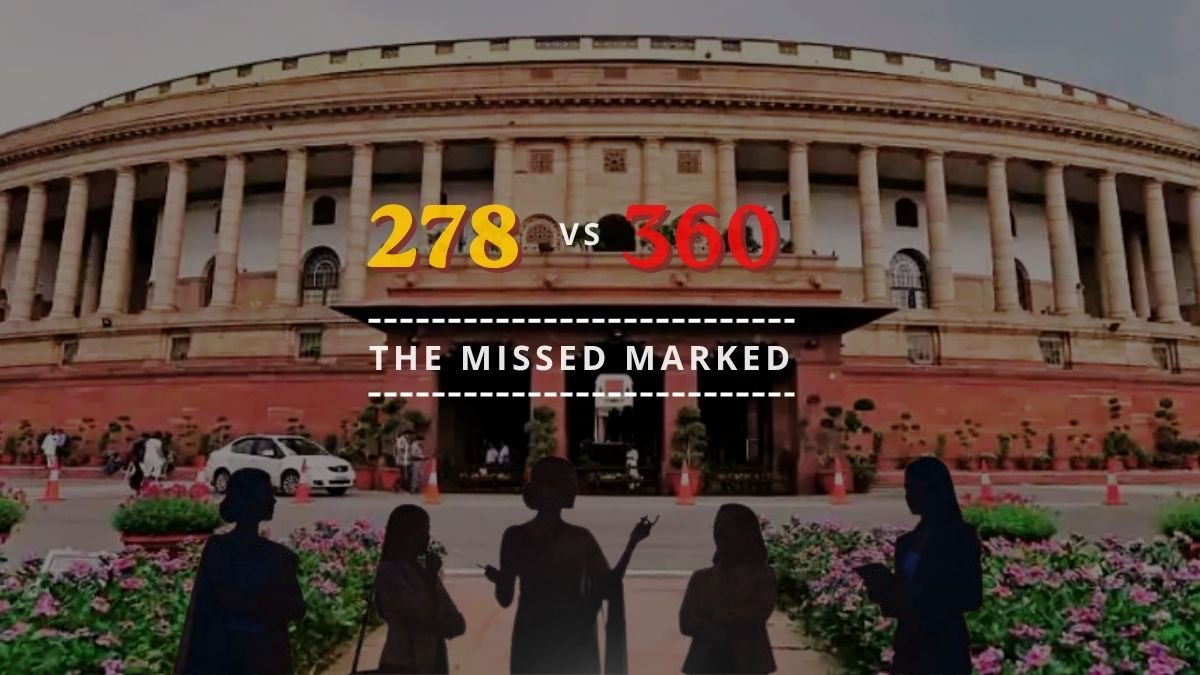

In a development that has reignited the national conversation around gender equality in politics, the Women’s Reservation Bill has failed to pass in the Lok Sabha. The proposed constitutional amendment, which aimed to reserve one-third of seats for women in Parliament and state assemblies, could not secure the crucial two-thirds majority required for approval.
For many, this moment feels like a significant pause—if not a setback—in India’s long journey toward greater political inclusion.
The voting process in the Lok Sabha painted a clear picture of the divide. Out of 489 members who participated in the voting, 278 voted in favor of the bill, while 211 opposed it. There were no abstentions.
However, constitutional amendment bills require a much higher threshold. The legislation needed at least 360 votes to pass, meaning it fell short by a considerable margin.
Before the voting took place, Lok Sabha Secretary General Utpal Kumar Singh formally read out the procedural rules, setting the stage for what would become a closely watched and politically charged decision.
The failure of the Women’s Reservation Bill cannot be attributed to a single factor. Instead, it reflects deeper political disagreements and trust issues between the ruling government and opposition parties.
One of the most contentious issues was the linkage of women’s reservation with the delimitation exercise—the process of redrawing constituency boundaries based on population changes. Opposition leaders argued that tying the implementation of reservation to delimitation could delay or complicate the process further. They demanded that the two be treated separately to ensure immediate impact.
Additionally, several opposition parties pointed to a broader trust deficit with the government, questioning whether the framework of the bill would truly deliver on its promise.
As expected, the bill’s defeat has triggered sharp political reactions. The ruling Bharatiya Janata Party (BJP) is likely to position itself as a strong advocate for women’s empowerment, emphasizing its support for the bill while holding opposition parties responsible for blocking its passage.
On the other side, opposition leaders maintain that their resistance was rooted in concerns about fairness, implementation, and transparency—not opposition to women’s representation itself.
This political back-and-forth highlights how even widely supported reforms can become entangled in larger strategic and ideological battles.
The Women’s Reservation Bill has been discussed for decades and is widely seen as a transformative step toward improving gender balance in Indian politics.
Despite progress in many areas, women’s representation in India’s legislative bodies remains relatively low. Increasing this representation is not just symbolic—it has practical implications. Greater participation by women can lead to more inclusive policymaking, stronger focus on social issues, and a governance system that better reflects the diversity of the population.
The latest failure adds to a long list of missed chances to implement women’s reservation in India. Each delay raises questions about political will and the ability of leaders to find common ground on issues of national importance.
Yet, this may not be the end of the story. Public discourse around women’s rights and representation continues to grow stronger, and pressure from civil society could push the issue back onto the legislative agenda in the future.
Was this a definitive setback or just another chapter in an ongoing struggle? The answer may depend on what happens next.
What remains undeniable is that the need for greater representation of women in politics continues to be urgent. The failure to pass the bill serves as a reminder that while the idea of equality is widely accepted, turning that idea into reality still faces significant hurdles.
At ExploreRealNews, we see this moment as more than just a parliamentary outcome—it is a reflection of the evolving priorities and challenges within Indian democracy. The debate over women’s reservation is far from over, and its outcome will shape the future of political representation in the country.
Stay connected with ExploreRealNews.com for in-depth analysis, real-time updates, and stories that truly matter. Follow us on: Facebook | Instagram | LinkedIn | Twitter