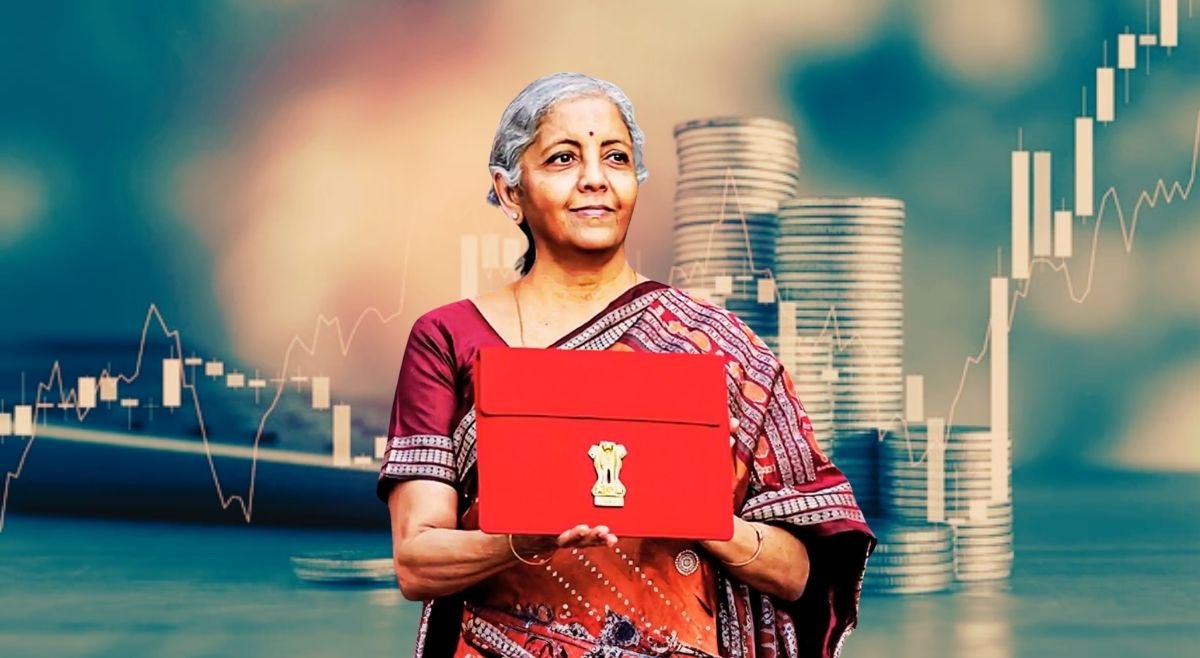

Every year, as Budget Day approaches, the same questions echo across Indian households.
For most Indians, the Union Budget is seen through one narrow window—tax cuts and price changes. But Budget 2026 is much more than numbers read out in Parliament. Behind the polished speech, the spreadsheets, and the headlines lies a world filled with traditions, intense secrecy, long nights, and decisions that quietly shape everyday life.
This is the side of Budget 2026 that rarely makes it to prime-time debates—the human stories behind the scenes.
On Sunday, February 1, 2026, when Finance Minister Nirmala Sitharaman stands up to present her ninth consecutive Union Budget, India will pause—if only for a few moments.
The Budget is not just a financial document—it is a mirror of national expectations.
Few people realise that for decades after Independence, India presented its budget at 5 PM, a timing chosen not for Indians—but for British convenience.
The logic?
So officials in London could follow the announcement during their working hours.
It wasn’t until 1999 that this colonial hangover ended, when the budget timing was shifted to 11 AM, making it truly awareness-friendly for Indian citizens.
Later, in 2017, another practical reform arrived. The budget date was advanced to February 1, ensuring policies could be implemented from April 1 without bureaucratic delays.
Behind these changes lies a silent shift—from symbolic rituals to citizen-centric governance.
One of the most intense chapters of the budget process is something most Indians never hear about—the lock-in period.
Days before the budget:
They stay inside North Block, living with spreadsheets, projections, and responsibility.
Why such strict isolation?
Because even a minor leak can:
It’s a reminder that behind every policy announcement, real people carry enormous pressure, often at personal cost.
Just before the lock-in starts, officials involved in the budget preparation gather for a simple ritual—the Halwa Ceremony.
There are no cameras or speeches. It’s a symbolic moment of appreciation and teamwork, marking the final stretch of preparation.
For those involved, it’s also the last moment of normalcy before days of complete confidentiality.
Among countless files and calculations, there is one document that holds unmatched importance—a summary sheet that carries the final numbers of the budget.
Its access is highly restricted.
Its movement is tightly controlled.
Its contents decide the fate of tax policies, spending priorities, and fiscal balance.
Yet, it remains unseen by the public eye.
A budget speech is not just reading from paper.
Every sentence is:
Some speeches stretch beyond two hours. Others are deliberately brief. But each one carries consequences that ripple through markets and households alike.
A word too strong can cause panic.
A promise too vague can cause disappointment.
Precision matters.
India in 2026 stands at a delicate crossroads.
For them, Budget 2026 isn’t about abstract GDP numbers—it’s about daily survival with dignity.
That’s why expectations from this budget are deeply emotional:
These hopes don’t come from greed—but from exhaustion.
A minor change in policy can quietly change lives:
While TV debates focus on winners and losers, the real impact plays out:
Budget 2026’s real success will be measured not in applause, but in relief.
Budgets are often criticised as being disconnected from reality. But behind every line item are teams analysing:
It may not always feel perfect, but the process is far more human than we imagine.
And that’s what makes the budget powerful—and fragile.
Ultimately, Budget 2026 is not just about:
It’s about trust.
Trust that:
Behind the scenes, amid silence, spreadsheets, and secrecy, the government writes not just a financial plan—but a promise.
The Union Budget is often reduced to headlines and hashtags.
But when you look deeper, you realise:
Budget 2026 isn’t just about tax cuts—it’s about the unseen effort, the quiet discipline, and the hope of millions waiting for a fairer tomorrow.
And maybe, just maybe, this time the numbers will also carry a little empathy.