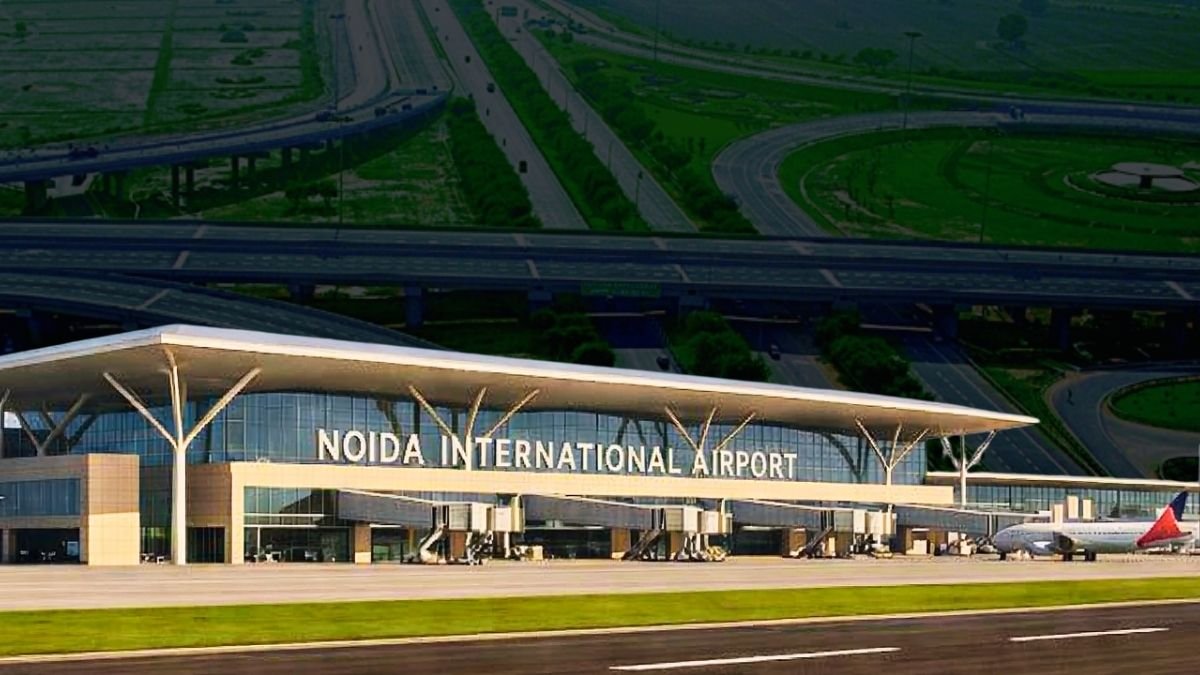

India’s aviation landscape is witnessing a major milestone today as the much-awaited Noida International Airport at Jewar officially opens its first phase. Inaugurated by Prime Minister Narendra Modi, this ambitious infrastructure project is not just another airport—it represents a significant leap toward improving connectivity, boosting economic growth, and transforming the Delhi-NCR region into a global aviation hub.
For residents of Noida, Greater Noida, Delhi, and western Uttar Pradesh, this development is set to change the way people travel, work, and do business. Here’s a clear and simple breakdown of everything you should know about Phase 1 of Noida Airport.
The Noida International Airport project has been in discussion for years, and its first phase is now finally a reality. Built at an estimated cost of over Rs. 11,000 crore, this phase is part of a larger long-term vision worth nearly Rs. 30,000 crore.
The airport is being developed by Yamuna International Airport Private Limited (YIAPL), a subsidiary of Zurich Airport International AG, in collaboration with the Uttar Pradesh government. The goal is to create a world-class aviation facility that combines global standards with Indian efficiency and hospitality.
One of the most important highlights of Phase 1 is its initial passenger handling capacity of 1.2 crore (12 million) annually. This is a significant number, especially considering the growing pressure on Delhi’s Indira Gandhi International (IGI) Airport.
What makes this project even more impressive is its scalability. In the coming years, the airport is expected to expand in multiple phases, eventually handling up to 7 crore passengers annually. This makes it one of the most future-ready infrastructure projects in India.
Phase 1 of the airport comes equipped with modern facilities designed to meet global aviation standards. These include:
The focus has been on ensuring smooth passenger movement, safety, and comfort, while also preparing for future expansion.
Apart from passenger travel, the airport is also set to play a crucial role in cargo and logistics. The cargo terminal in Phase 1 can handle over 2.5 lakh metric tonnes annually, with plans to scale it up to 18 lakh metric tonnes in the future.
This will significantly benefit industries, exporters, and businesses in western Uttar Pradesh and nearby regions by reducing logistics costs and improving delivery timelines.
With the launch of Noida International Airport, the Delhi-NCR region will now have two major international airports—IGI Airport in Delhi and this new facility in Jewar.
Together, these airports are expected to function as an integrated aviation network, easing congestion, distributing passenger traffic, and enhancing overall travel efficiency. This is a big step toward positioning the region among the world’s leading aviation hubs.
One of the standout features of the Noida Airport project is its multi-modal connectivity. The airport is designed to seamlessly connect with:
This integrated approach will reduce travel time and make the airport easily accessible from Noida, Greater Noida, Delhi, and surrounding cities.
The impact of this airport goes far beyond travel. It is expected to generate thousands of direct and indirect jobs, attract investments, and boost sectors like tourism, real estate, and logistics.
For Uttar Pradesh, this is a major achievement, as it becomes the first state in India to have five international airports, strengthening its position as a key economic hub.
During the inauguration, Prime Minister Narendra Modi highlighted the importance of this project in improving connectivity and easing congestion at Delhi’s IGI Airport. He emphasized that the airport will act as a catalyst for regional development, benefiting both urban and rural areas.
The inauguration also includes the launch of the cargo terminal and the foundation stone for a Maintenance, Repair, and Overhaul (MRO) facility, which will further enhance aviation services in the region.
For everyday travelers, the opening of Noida Airport brings several advantages:
In simple terms, flying is about to become more convenient and efficient for millions of people.
The inauguration of Phase 1 of Noida International Airport marks the beginning of a new chapter in India’s infrastructure and aviation story. It’s not just about a new airport—it’s about better connectivity, economic growth, and future-ready development.
As the project expands in the coming years, its impact will only grow stronger, making it one of the most important infrastructure developments in recent times.
For now, Phase 1 sets the foundation—and it’s a strong one.
Noida International Airport Phase 1 was inaugurated on March 28, 2026, by Prime Minister Narendra Modi.
The airport is located in Jewar, near Greater Noida in Uttar Pradesh, and is well-connected to Delhi-NCR via the Yamuna Expressway.
In its first phase, the airport can handle around 1.2 crore passengers annually.
It will reduce congestion at Delhi’s IGI Airport, improve connectivity, and boost economic growth in the region.
The airport includes a 3,900-meter runway, modern terminal, advanced landing systems, and world-class infrastructure.
Yes, the cargo terminal can handle over 2.5 lakh metric tonnes annually, with plans for future expansion.
The project is being developed by Yamuna International Airport Private Limited in partnership with Zurich Airport International AG.
It is designed as a multi-modal transport hub, connecting road, metro, rail, and regional transit systems.
Stay updated with the latest developments across India and beyond on ExploreRealNews. From infrastructure breakthroughs to policy updates, we bring you reliable and insightful coverage that matters. For more updates, visit: www.explorerealnews.com. Follow us on: Facebook | Instagram | LinkedIn | Twitter