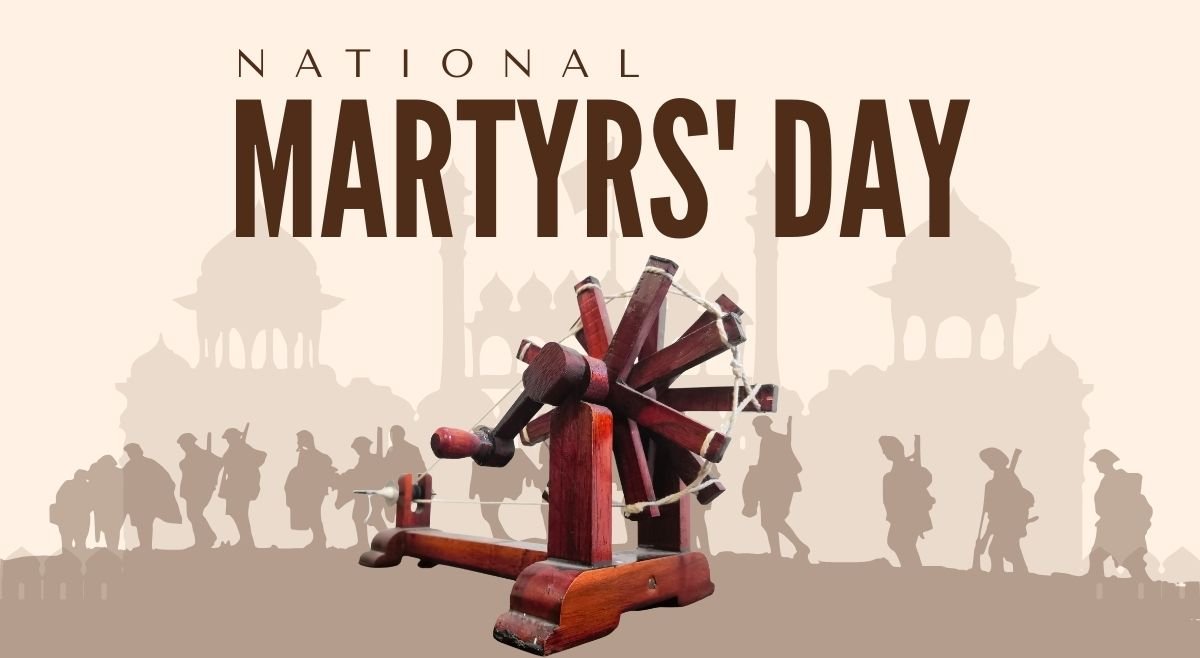

Every nation is built on stories of courage, sacrifice, and unbreakable spirit. In India, 30 January stands as a solemn reminder of that spirit—a day when the entire country bows its head in silence to honour those who laid down their lives for the nation. Known as Martyrs’ Day or Shaheed Diwas, this day is not just about remembering history; it is about reconnecting with the values that shaped India’s freedom and identity.
As Martyrs’ Day 2026 approaches, the relevance of this observance feels stronger than ever. In a fast-moving world, where remembrance often fades into routine, 30 January urges us to pause, reflect, and remember the cost of the freedom we enjoy today.
Martyrs’ Day, observed annually on 30 January, commemorates the sacrifice of India’s brave martyrs—most notably Mahatma Gandhi, who was assassinated on this day in 1948. The day marks not only the loss of the Father of the Nation but also honours countless freedom fighters and unsung heroes who gave everything so that India could stand free.
In India, the word “Shaheed” carries deep emotional weight. It represents courage beyond fear, love for the nation beyond self, and sacrifice beyond life itself. Shaheed Diwas is a reminder that independence was not gifted—it was earned through blood, struggle, and unwavering resolve.
The significance of 30 January is rooted in one of the most painful moments in Indian history. On this day in 1948, Mahatma Gandhi was assassinated in New Delhi during an evening prayer meeting. His death shook the conscience of the nation and the world.
Gandhi was not just a leader; he was the moral compass of India’s freedom movement. His commitment to non-violence, truth, and unity defined India’s path to independence. By observing Martyrs’ Day on the day of his assassination, India honours Gandhi’s supreme sacrifice and the countless lives lost in the struggle for freedom.
This day also reminds us that peace, unity, and freedom must be protected—not taken for granted.
In 2026, Martyrs’ Day will once again be observed with dignity, silence, and respect across the country. The day is marked by:
Unlike celebratory national days, Martyrs’ Day carries a quiet gravity. There are no loud slogans or fireworks—only reflection, gratitude, and remembrance.
Gandhi’s life was a lesson in selflessness. He lived simply, spoke gently, and fought injustice without raising a weapon. His assassination was a tragic reminder that standing for truth often comes at a great personal cost.
By observing Martyrs’ Day, India remembers not just Gandhi’s death, but the values he lived for:
These ideals are as relevant today as they were decades ago.
While Mahatma Gandhi is central to Martyrs’ Day, the observance goes far beyond one individual. It honours every martyr—from iconic freedom fighters to unnamed revolutionaries whose stories never made it to textbooks.
They came from villages and cities, from every religion and region. Some carried flags, others carried ideals. Many died young, never knowing if their struggle would succeed. But together, they shaped India’s destiny.
Martyrs’ Day reminds us that freedom was built not by one hero, but by millions of brave hearts.
In today’s digital and fast-paced world, remembering the past may feel distant. But Martyrs’ Day remains deeply relevant.
It reminds us:
At a time when differences often overshadow dialogue, Shaheed Diwas teaches us to choose understanding over hatred and unity over conflict.
30 January is also observed as Sarvodaya Day, meaning “upliftment of all.” This reflects Gandhi’s dream of an India where progress is inclusive and compassion guides development.
Sarvodaya is not about personal success alone—it is about collective growth. By linking Martyrs’ Day with Sarvodaya Day, India reinforces the idea that true tribute to martyrs lies in building a just, equal, and humane society.
How Schools and Students Observe Martyrs’ Day
Educational institutions play a vital role in keeping the spirit of Martyrs’ Day alive. Across India, schools and colleges organize:
These activities ensure that younger generations understand the emotional and historical significance of Shaheed Diwas—not just as a date, but as a legacy.
Across India, Martyrs’ Day is known by different names, reflecting the nation’s diversity:
Though the names differ, the emotion remains the same—gratitude and respect for sacrifice.
What Can We Do to Truly Honour Our Martyrs?
True tribute goes beyond ceremonies. We honour martyrs when we:
Living responsibly, voting wisely, and standing up against injustice are modern ways of remembering the sacrifices made on our behalf.
30 January: A Date That Speaks to the Soul of India
Martyrs’ Day is not about mourning alone—it is about awakening. It awakens our conscience, reminds us of our roots, and challenges us to be better citizens.
As Martyrs’ Day 2026 approaches, let us remember that the greatest tribute to our martyrs is not silence alone, but action guided by their ideals.
Freedom is not just inherited—it is preserved through values, unity, and responsibility.
On 30 January, India does not celebrate—it remembers.
It remembers the lives that were lost so the nation could live. It remembers the ideals that shaped its freedom. And it reminds every citizen that sacrifice is not meant to be forgotten.
Martyrs may leave this world, but their courage lives on—forever etched in the soul of India.
As India observes Martyrs’ Day on 30 January, the nation bows in silence to honor the sacrifices that made freedom possible and continue to inspire generations.
Continue reading on www.explorerealnews.com. Follow us on facebook, Instagram, Linkedln and twitter for regular updates.