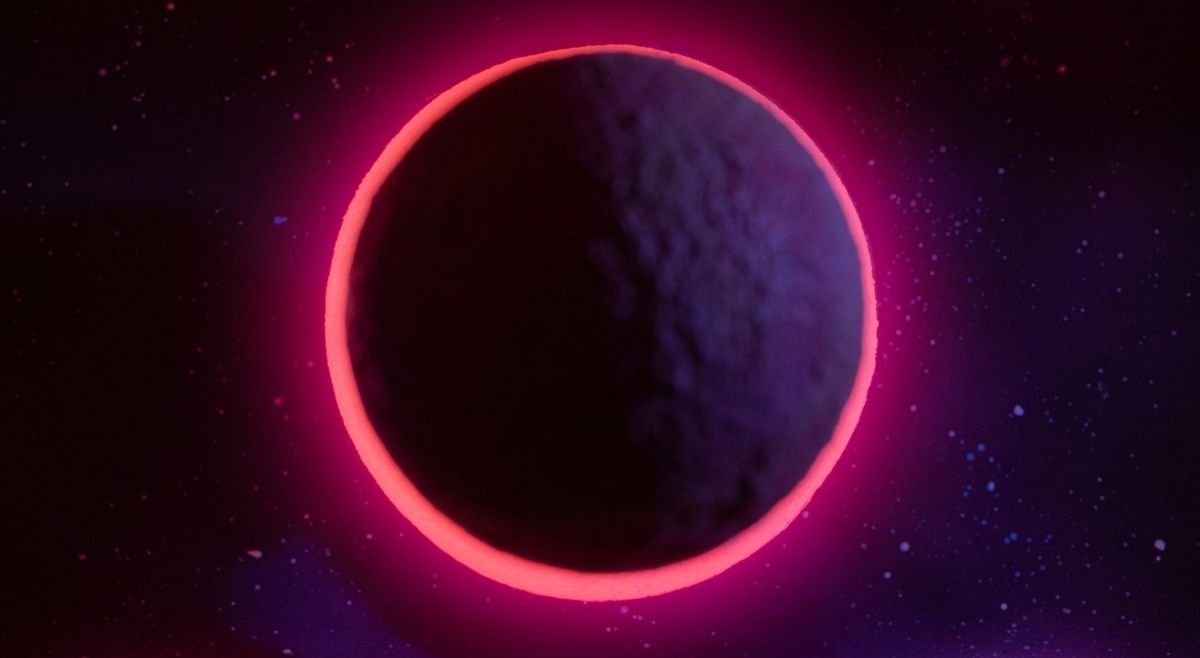

On 3 March 2026, the Moon will slowly slip into Earth’s shadow — a celestial moment that has fascinated civilizations for thousands of years. While astronomers see it as a predictable alignment of cosmic bodies, many households in India view it through a lens of tradition, faith, and inherited customs.
As the first lunar eclipse of 2026 approaches, a simple question echoes everywhere:
Will it actually be visible in India? And if yes, what should people expect?
Let’s separate myth from measurable reality and understand this event clearly.
A lunar eclipse does not occur randomly. It only happens when the Sun, Earth, and Moon fall into a near-perfect straight line. During this alignment, Earth blocks sunlight from reaching the Moon, casting its shadow across the lunar surface.
On 3 March 2026, this alignment will create a total lunar eclipse. At some point, the Moon will appear dimmer and may even take on a muted reddish shade.
This color change is not mystical — it is atmospheric science. Sunlight bends through Earth’s atmosphere, and red wavelengths survive the journey better than blue ones. The result? A copper-toned Moon suspended in the evening sky.
Although the eclipse technically begins in the afternoon (around 3:20 PM IST), the Moon itself will not yet be visible from India.
In most Indian cities, moonrise will occur close to 5:59 PM.
By that time:
In practical terms, Indians will witness only the tail end of the event — and even that depends on weather conditions.
So if you are expecting to watch the entire transformation from start to finish, that experience will not be possible from India.
Countries in Australia, Southeast Asia, and parts of the Pacific region will have a better view.
But here’s where geography matters.
In many Indian households, discussion about eclipses quickly shifts toward Sutak Kaal.
Traditionally, the Sutak period begins several hours before an eclipse. For this event, it would start around 6:20 AM on 3 March 2026.
During Sutak:
It is important to understand something clearly: Sutak is a faith-based observance, not a scientifically established hazard window.
There is no radiation surge.
No harmful rays.
No atmospheric disturbance that affects food or health.
Yet traditions continue — not because of fear, but because culture often travels across generations more strongly than data.
Even in modern times, eclipses trigger emotional reactions.
Why?
Because they interrupt normalcy.
A bright full Moon, symbolic of clarity and completeness, slowly darkens. The shift feels symbolic — almost like a metaphor for temporary uncertainty.
This is perhaps why ancient civilizations attached spiritual meaning to eclipses. They experienced it without scientific context, so imagination filled the gaps.
Today, science explains the “how.”
But culture still preserves the “why.”
Astrological communities suggest that this eclipse falls under the influence of Leo (Simha Rashi).
Interpretations often mention:
But here is an important distinction.
Astrology offers symbolic interpretation, not measurable prediction.
There is no scientific mechanism linking lunar shadows to career setbacks or personal disputes.
Belief systems can influence behavior — but the eclipse itself does not control decisions.
Perhaps no topic generates more discussion than pregnancy during eclipses.
Traditional advice often includes:
From a medical perspective, lunar eclipses do not emit harmful radiation or create biological risk.
However, emotional comfort matters. If following tradition brings peace of mind, there is no harm — as long as it does not create anxiety.
Calmness is healthier than fear.
Unlike a solar eclipse, you do not need protective glasses.
Lunar eclipses are completely safe for direct viewing.
You may watch:
The only real requirement is a clear sky.
Historically, eclipses were blamed for:
In reality, global events follow complex human and environmental patterns — not lunar shadows.
Astronomy operates independently of politics.
The Moon does not choose timing based on world affairs. It follows gravitational laws.
There is something undeniably poetic about a lunar eclipse.
Light fades.
Shadow deepens.
Then brightness returns.
That cycle mirrors human experience.
Temporary darkness does not signal permanent loss. It signals transition.
Instead of interpreting Chandra Grahan 2026 as a warning, consider viewing it as:
In a world filled with noise, the silent choreography of the universe is humbling.
Chandra Grahan 2026 will not dramatically alter destiny. It will not disturb the Earth’s balance. It will not rewrite personal fate.
It is simply a celestial alignment — beautiful, predictable, and temporary.
But its meaning depends on perspective.
And for all of us, it is a reminder that even when shadows fall, light patiently waits to return.
ExploreRealNews.com delivers reliable, well-researched, and easy-to-understand coverage on current affairs, spirituality, astrology, education, and global events. Our goal is to present factual updates with clarity, depth, and a human touch.
A- No, only the final phase will be visible after moonrise.
A- After 5:59 PM IST, depending on local moonrise timing.
A- Yes, it is completely safe to view with naked eyes.
A- Around 6:20 AM IST on 3 March 2026.
A: No, it is a natural astronomical event and safe to watch.
Disclaimer: This article is for informational purposes only. Religious and astrological interpretations are based on traditional beliefs. Readers are advised to rely on verified scientific sources for factual understanding.