
March 2026 | Festival Guide
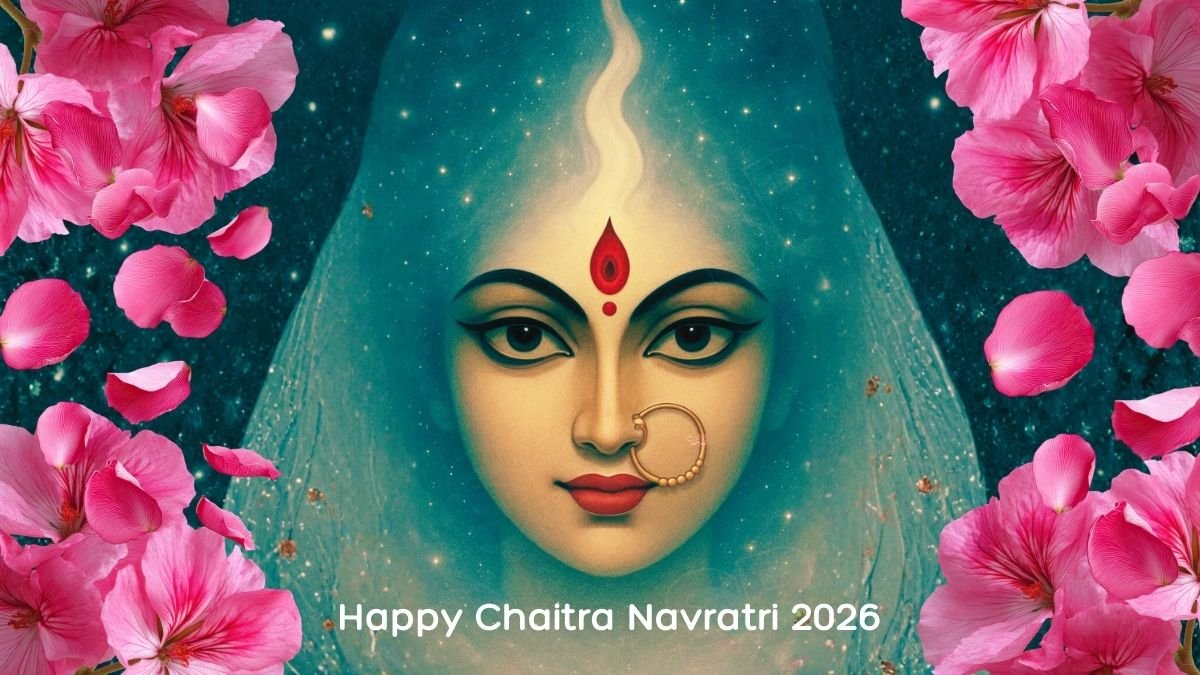
Chaitra Navratri 2026 begins on 19 March and continues until 27 March, marking nine sacred days dedicated to the worship of Maa Durga and her nine divine forms known as Navdurga. Celebrated across India with fasting, prayers, and vibrant rituals, this festival symbolizes spiritual renewal, devotion, and the victory of good over evil.
The festival opens with the sacred ritual of Kalash Sthapana, followed by daily worship of different forms of the Goddess. Devotees observe fasting, perform aarti, and chant sacred texts such as the Durga Saptashati, seeking blessings for strength, prosperity, and protection.
This guide explains the complete dates, rituals, Navdurga significance, fasting traditions, and spiritual meaning of Chaitra Navratri 2026.
There is a stretch of nine days each spring when time in Hindu households seems to shift gear. Conversations grow softer. Kitchens smell of ghee and fresh flowers. Lamps are lit before sunrise. This is Chaitra Navratri — and in 2026, it arrives on 19 March, carrying with it the same quiet electricity it always does.
Rooted in the Chaitra month of the Hindu Panchang, this festival marks not just a spiritual observance but, in many parts of India, the very start of a new year. It is a season of renewal — both outward and deeply personal.
Three moments within the nine days carry particular significance:
Date Weekday What Happens 19 March 2026 Thursday Festival opens — Kalash Sthapana & worship of Maa Shailputri 26 March 2026 Thursday Durga Ashtami — Kanya Puja, honouring young girls as the Goddess 27 March 2026 Friday Ram Navami — birth of Lord Rama; festival draws to a close
Pratipada Tithi on 19 March begins at 6:52 AM — the window when Kalash Sthapana is ideally performed.
Picture a household just after dawn. A copper or clay pot sits at the centre of a freshly cleaned altar space, filled with water, sealed with mango leaves, and topped with a coconut. Beside it, grains of barley have been pressed into a mound of soil.
This is Kalash Sthapana — and it does something quietly profound. The ritual transforms an ordinary corner of a home into sacred space. The Kalash is believed to hold the living presence of Maa Durga within it for all nine days that follow.
The barley seeds carry their own symbolism: whatever you plant with intention during these nine days — in the soil, in yourself — will grow. That is the promise embedded in this ancient gesture.
Perhaps the most beautiful design of Navratri is this: you do not worship one idea for nine days. You meet nine different aspects of the same boundless energy — the Navadurga. Each day offers a distinct invitation.
Day
Goddess
The Quality She Awakens in You


Day 1
Maa Shailputri
Groundedness — the mountain's stillness lives in you too


Day 2
Maa Brahmacharini
Persistence — showing up with devotion, even when it is hard


Day 3
Maa Chandraghanta
Fearlessness — the warrior energy that silences self-doubt


Day 4
Maa Kushmanda
Creativity — the cosmic force that wills things into existence


Day 5
Maa Skandamata
Nurturing — the kind of love that protects without smothering


Day 6
Maa Katyayani
Resolve — cutting through obstacles with focused determination


Day 7
Maa Kalaratri
Transformation — facing what is dark so light can enter


Day 8
Maa Mahagauri
Clarity — a mind washed clean, ready for deeper understanding


Day 9
Maa Siddhidatri
Fulfilment — the blessings that come when you have walked the path
Each morning, devotees offer flowers, fruits, and prayers to that day's Goddess — a daily appointment with the divine that slowly shifts something inside.
Observing a Navratri fast looks different across families. Some commit to all nine days; others choose Ashtami and Navami alone. The food itself changes — wheat and rice step aside for kuttu ka atta (buckwheat flour), singhare ka atta (water chestnut flour), sendha namak (rock salt), and an abundance of fresh fruit.
But anyone who has fasted during Navratri will tell you: the hunger that is actually tamed is not physical. It is the hunger for distraction, for noise, for the ordinary pace of life. These nine days ask you to slow down. The dietary changes are simply one tool among many for achieving that.
When the body is lighter, the mind tends to follow. That is, perhaps, the oldest wisdom behind any sacred fast.
By the eighth day, something has shifted. Devotees who have fasted and prayed through the week carry a particular softness on Durga Ashtami. This is the day of Kanya Puja — a ritual that many describe as the most emotionally resonant of the entire festival.
Young girls, usually between the ages of two and ten, are invited into homes and treated not as guests but as embodiments of the Goddess herself. Their feet are washed. They are dressed in new clothes, offered food cooked with care, and gifted small tokens. For many families, the sight of a child accepting these honours with her natural ease and grace — entirely unaware she is being worshipped — is quietly overwhelming.
Ram Navami, the ninth and final day, arrives with a different energy — celebratory, expansive. The birth of Lord Rama, the king whose life was a lesson in righteous living, is marked across temples and homes with readings from the Ramcharitmanas, communal bhajans, and a warmth that spills out onto the streets.
Navratri closing on Ram Navami is fitting. Nine days of honouring the feminine divine, concluded by celebrating a life lived in harmony with those very values — courage, compassion, truth.
Walk through any northern Indian city during Chaitra Navratri and you will find evidence of the festival everywhere — marigold garlands at doorsteps, the hum of the Durga Saptashati floating from temple loudspeakers, neighbourhood women gathered in the evening for collective aarti.
In some regions, these nine days also coincide with regional new year celebrations — Gudi Padwa in Maharashtra, Ugadi in parts of South India, Baisakhi in Punjab. The spring air carries multiple reasons to feel hopeful, and communities do not waste the opportunity.
Beyond geography, what unites all these celebrations is something simple: the belief that taking time to pause, to honour something greater than daily routine, makes ordinary life more meaningful.
When Navratri ends and the Kalash is ceremonially immersed, there is always a brief stillness. The lamps go out. The flowers are cleared away. Life resumes its usual rhythm.
But something tends to remain — not in the home, but in the person who observed those nine days. A little more patience, perhaps. A slightly quieter mind. The faint memory of what it felt like to put devotion first, even briefly.
The nine forms of the Goddess are not distant mythological figures. They are qualities — strength, discipline, courage, nurturing, determination, transformative power, purity, clarity, wisdom. Navratri is essentially a nine-day workshop in becoming more fully yourself.
That is what makes it worth returning to, year after year, without fail. ExploreRealNews.com is a trusted digital platform delivering insightful coverage on global events, education, culture, spirituality. Our mission is to present accurate, meaningful, and reader-focused content that helps audiences stay informed and connected with traditions, festivals, and developments shaping the world.
Stay up-to-date with more such trending topics by joining our growing online community. Follow us on: Facebook | Instagram | LinkedIn | Twitter
Chaitra Navratri 2026 · 19 March – 27 March · Jai Mata Di
Updated on: 11 March 2026 | By ExploreRealNews Editorial Team
Chaitra Navratri will be celebrated from 19 March to 27 March 2026.
The festival begins with Kalash Sthapana, a ritual invoking Goddess Durga into the sacred pot.
Shailputri, Brahmacharini, Chandraghanta, Kushmanda, Skandamata, Katyayani, Kalaratri, Mahagauri, Siddhidatri.