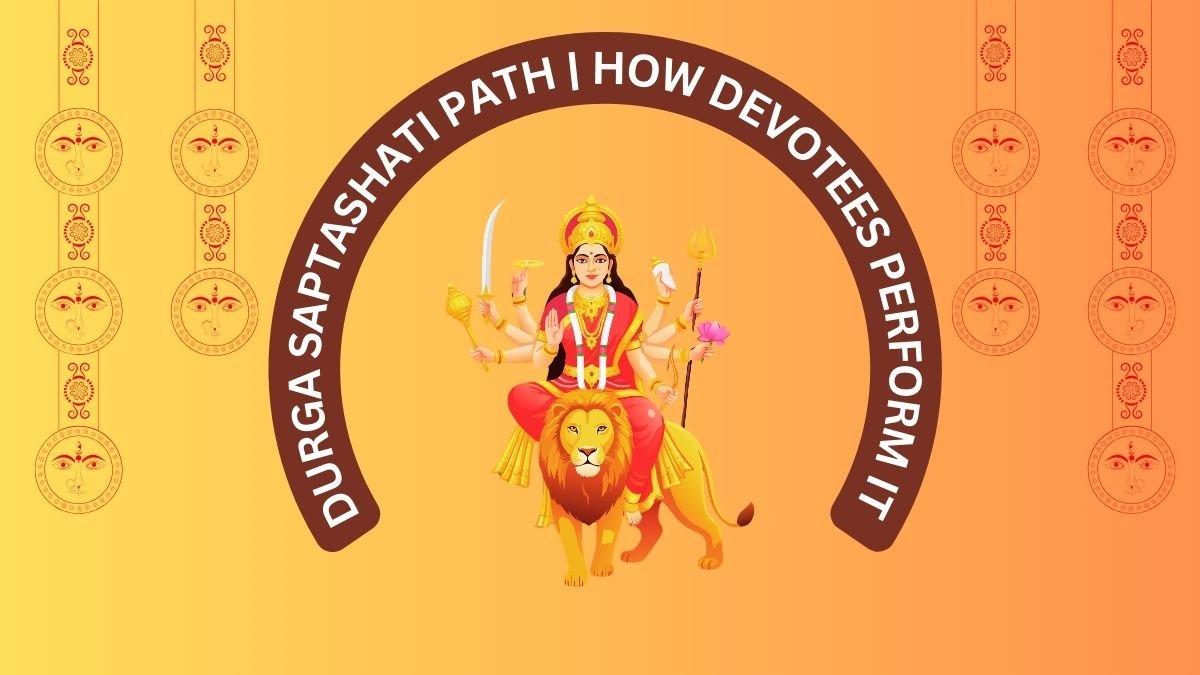

Among the most revered and spiritually potent texts in the Hindu tradition, the Durga Saptashati occupies a place of extraordinary significance. Rooted in the ancient Markandeya Purana, this sacred scripture is a collection of 700 verses — saptashati literally meaning 'seven hundred' — that narrate the divine battles and ultimate victories of Goddess Durga over demonic forces. More than a mythological account, it is a living scripture, recited daily by millions across India and the world, carrying within it the energy of the Divine Feminine in her most formidable and compassionate form.
The text is also widely known as the Devi Mahatmya, meaning 'the glorification of the Goddess,' or Chandi Path, referring to the fierce, radiant aspect of the Goddess who dispels darkness. Whether recited in a quiet home shrine at dawn or chanted aloud in a bustling temple during Navratri, the Durga Saptashati is believed to activate blessings, protection, and a profound inner transformation in those who engage with it sincerely.
On the surface, the Durga Saptashati tells the story of the Goddess Durga descending to defeat three great demons — Madhu and Kaitabha, Mahishasura, and Shumbha-Nishumbha — each of whom had disrupted the cosmic order and terrorized the universe. But beneath this narrative lies a profound philosophical teaching about the nature of the human mind, ego, and the path to liberation
The scripture is divided into three distinct sections or charitas, each with its own spiritual symbolism:
This section describes the manifestation of Goddess Mahakali and her victory over the demons Madhu and Kaitabha. These two demons represent tamas (inertia and ignorance) and the ego's refusal to surrender. Their battle with Lord Vishnu — who can only rouse himself with the Goddess's grace — symbolises how even divine consciousness needs the Shakti (power) of the Feminine to overcome deep-seated spiritual lethargy.
The most celebrated section of the text, this charita narrates the epic defeat of Mahishasura, the buffalo-demon, by Goddess Durga. Mahishasura embodies rajas — restless ambition, arrogance, and the intoxication of power. The Goddess, created from the combined radiance of all the male deities who had become helpless before this demon, represents the ultimate coalescence of divine energy. Her victory teaches that ego, pride, and worldly arrogance are ultimately no match for pure, awakened Shakti.
This section presents the Goddess in her most luminous form as she conquers Shumbha and Nishumbha, along with their formidable generals. It also introduces the fearsome Kali, born from Durga's brow in the heat of battle. Philosophically, this section dissolves the last veil of illusion — the belief that even spiritual power is 'ours' — pointing toward the ultimate realisation that all strength, knowledge, and grace belong to the Goddess alone. Shumbha and Nishumbha represent the subtle ego that clings even within spiritual practice.
At its deepest level, the Durga Saptashati is a manual for inner awakening. The demons are not merely mythological creatures — they represent the inner enemies of the human soul: ignorance, ego, desire, and the illusion of separateness from the Divine. The Goddess is not just a deity to be worshipped externally; she is the Shakti that dwells within every being, waiting to be recognised and invoked. The path is one of surrender, devotion, and the sincere desire to cut through the veils that obscure our true nature.
Devotees across generations have testified to remarkable transformations in their lives through the regular and sincere recitation of the Durga Saptashati. The scripture itself, in its Phalashruti (fruit-of-recitation) verses, outlines specific blessings that arise from its practice. Here is a comprehensive look at the benefits — both as described in the text and as experienced by sincere practitioners.
The Durga Saptashati is regarded as one of the most powerful protective shields in the Hindu tradition. Reciting it is believed to create an invisible armour (kavach) around the devotee, guarding against negative energies, evil eye, black magic, and harmful intentions of others. The Devi Kavacham — a separate stotra typically recited before the main path — reinforces this aspect by invoking the Goddess to protect every limb and every direction surrounding the devotee.
The Goddess is invoked repeatedly as Durgati Nashini — the destroyer of suffering and difficult circumstances. Many devotees report that regular recitation brings a tangible sense of calm, courage, and clarity. The vibrations of the Sanskrit verses are said to harmonise the nervous system, dissolve deep-seated fears, and replace anxiety with a quiet inner strength. This makes the practice particularly valuable during periods of life crisis, grief, or uncertainty.
The Phalashruti chapter promises that those who recite the Saptashati with devotion will see their obstacles removed, their enemies subdued, and their legitimate desires fulfilled. Whether one seeks success in career, resolution of legal disputes, harmony in relationships, or progress in spiritual practice, the Goddess is invoked as the ultimate bestower of both worldly prosperity (bhukti) and spiritual liberation (mukti).
The tradition holds that the Goddess, in her form as Mahalakshmi, bestows health and vitality upon her devotees. Recitation during illness — especially when offered with sincere intention and pure heart — is believed to accelerate healing and strengthen the body's life force. Certain specific chapters of the Saptashati are recommended by learned pandits for specific health conditions.
Beyond worldly benefits, the Durga Saptashati is ultimately a tool for moksha — spiritual liberation. By repeatedly meditating on the Goddess's forms, attributes, and victories through the vehicle of sacred sound, the devotee gradually purifies their consciousness, dissolves ego-identification, and awakens to the Goddess's presence within themselves. This is the highest fruit of the path, as described in the concluding verses of the text.
Reciting the complete Saptashati during the nine nights of Navratri — particularly Sharada Navratri in autumn and Chaitra Navratri in spring — is considered especially potent. The collective spiritual energy generated across countless households and temples during these periods amplifies the individual practice manifold.
The Durga Saptashati is not a text to be picked up casually; it is a living ritual involving specific preparations, procedures, and attitudes. While the Goddess welcomes all sincere hearts regardless of their level of adherence to ritual, the traditional approach ensures that the maximum spiritual benefit is received. Here is a comprehensive guide to how devoted practitioners approach the Path.
Before beginning the recitation, the devotee takes a bath, wears clean clothes — preferably in red, saffron, or white — and approaches the practice with a settled, reverent mind. It is customary to fast or eat only sattvic (pure, vegetarian) food on the day of recitation. Lighting a diya (oil lamp) with ghee and incense sticks creates a sacred atmosphere conducive to deep practice.
A clean altar is arranged with an image or idol of Goddess Durga at the centre. Offerings typically include red flowers (especially hibiscus), betel leaves and nuts, coconut, sweets, vermillion (sindoor), turmeric, and a coconut adorned with a red cloth and moli (sacred thread). The Saptashati book itself is placed on a wooden plank (chowki) covered with red cloth and treated as the physical form of the Goddess.
Many practitioners begin with a brief Shodashopachara (sixteen-step) worship of the Goddess before opening the text. This involves invoking her presence, offering water, flowers, incense, light, and food, and establishing a sacred relationship between the devotee and the Divine before the recitation begins.
The complete Durga Saptashati recitation follows a specific liturgical sequence that surrounds and supports the main text. Understanding this structure helps the devotee approach the practice with full awareness.
Before the main thirteen chapters, several supporting texts are traditionally recited in the following order:
The main body of the Saptashati consists of thirteen chapters divided across the three charitas. Devotees either read these aloud in Sanskrit from the original text — with correct pronunciation being highly valued — or follow along in their regional language with translation. The verses carry potent energy even when recited with imperfect pronunciation, as long as the heart's intention is pure.
It is common for practitioners to pause at certain key stotras embedded within the text — such as the Mahakali Dhyanam, the Devi Suktam, and the Aparadha Kshamapana Stotram — to offer special prayers or deeper meditative attention.
After the thirteen chapters, the following are traditionally recited:
A question that arises frequently, particularly among those new to the tradition, is whether there are restrictions on who may recite the Saptashati. The traditional view holds that the text can be recited by anyone — regardless of caste, gender, or background — who approaches it with genuine devotion and respect. The Goddess makes no distinctions. Women, including during menstruation, are generally advised to refrain from the formal ritual puja aspects but may recite the text; though practice varies by regional tradition and family custom.
Children can and do recite the Saptashati in many households where the tradition is passed down through families. In such homes, the text is learnt from a young age, and its verses become part of the soul's natural vocabulary — a permanent refuge carried through life.
The Durga Saptashati is not merely a religious text — it is an encounter with the living reality of the Divine Feminine. Every word of it pulses with her presence. Through its stories, she shows us what it means to be formidable and yet compassionate, fierce and yet full of grace. She battles within us every day — against our own inner demons of fear, ignorance, and ego — and she always wins, as long as we invite her in.
To recite the Durga Saptashati with an open heart is to place yourself in the hands of the Great Mother. Whatever your circumstances, whatever your struggles, she hears. She responds. She transforms. That, ultimately, is the deepest meaning of this extraordinary scripture — and the greatest of all its gifts.
ExploreRealNews.com is a trusted digital platform that delivers insightful coverage on global events, spirituality, culture, education, and important international observances. Our mission is to provide accurate, meaningful, and reader-focused content that helps audiences stay informed about the world while exploring deeper perspectives on traditions, knowledge, and contemporary issues.
From in-depth explainers on spiritual texts and cultural practices to analysis of global developments and inspiring stories, ExploreRealNews strives to present information in a clear, responsible, and engaging manner. We aim to connect readers with knowledge that not only informs but also inspires thoughtful understanding of the world around them. Follow us on facebook, Instagram, Linkedln and twitter for trending-astro related tips that matter to you.
Q2. How long does Durga Saptashati Path take?
A complete recitation of the 13 chapters usually takes around 2 to 3 hours depending on the speed and method of chanting.