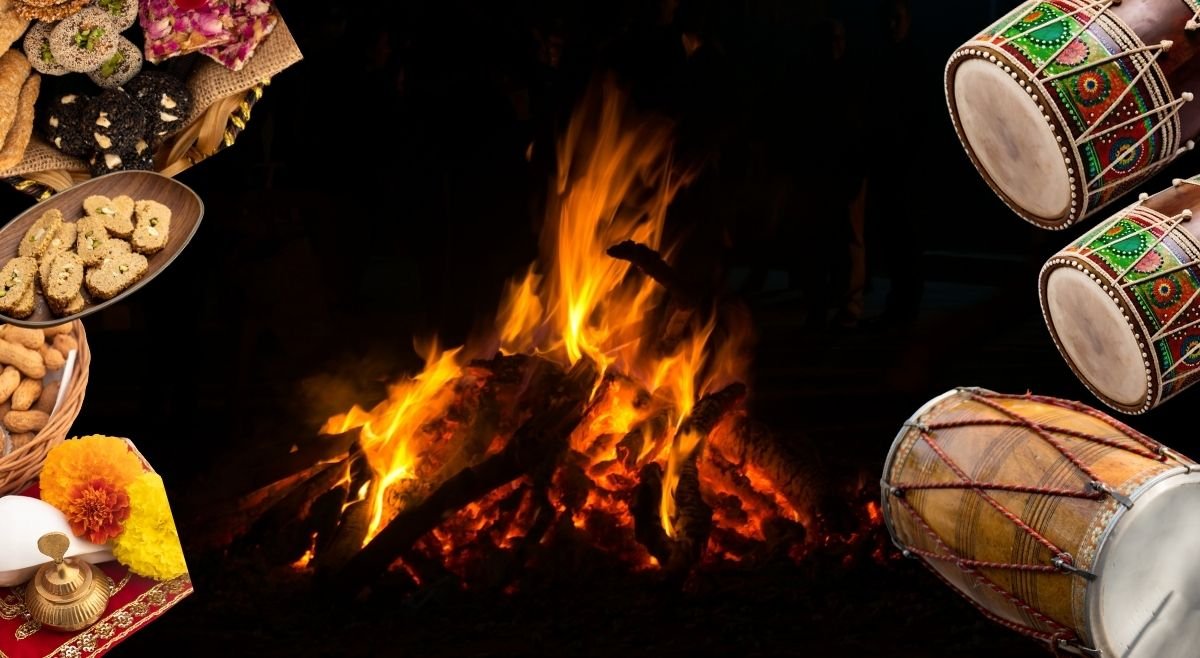

As winter reaches its coldest stretch, a quiet transformation begins to take place across North India. The air still carries a chill, but evenings grow warmer with laughter, music, and the soft crackle of fire. This change announces the arrival of Lohri, a festival that is not only about celebration, but also about gratitude, memory, and human connection.
With the new year approaching, many people are searching for clarity around one simple question: When is Lohri in 2026, and what does it truly represent? The answer is rooted in time, tradition, and a cultural story that has survived generations.
In 2026, Lohri will be celebrated on Tuesday, 13 January.
Unlike many Indian festivals that shift each year according to the lunar calendar, Lohri follows the solar cycle. This is why its date remains largely unchanged. For decades, families have known that the night of 13 January marks the turning point of winter, just before the sun begins its northward journey.
This fixed date has given Lohri a special place in people’s lives. It is predictable, comforting, and familiar—much like the traditions associated with it.
Lohri’s timing is closely linked to nature rather than ritual complexity. Mid-January is when the harshness of winter slowly begins to ease. Days grow slightly longer, and farmers start seeing the promise of the upcoming harvest.
The festival arrives just before Makar Sankranti, a day that marks the sun’s movement into Capricorn. Lohri acts as a gentle transition—an emotional and cultural bridge between the cold, quiet days of winter and the brighter weeks ahead.
The Significance of Lohri in Indian Culture
At its core, Lohri is a festival of thankfulness. Long before cities expanded and lifestyles changed, communities depended entirely on agriculture and seasonal cycles. Lohri became a moment to acknowledge nature’s role in survival.
The festival carries multiple layers of meaning:
Even today, these emotions remain relevant, making Lohri far more than a symbolic event.
Every festival has a story, and Lohri’s story is deeply human.
One of the most cherished folk narratives associated with Lohri revolves around Dulla Bhatti, a legendary figure from Punjab. Known for standing up against injustice, he became a symbol of courage and compassion. Folk songs sung during Lohri still mention his name, not as a historical lesson, but as a reminder of moral strength.
These songs pass values from one generation to another—values of protecting the vulnerable and standing for what is right. In this way, Lohri keeps history alive through oral tradition rather than written record.
The bonfire stands at the center of every Lohri gathering, but its importance goes far beyond visual beauty.
Fire represents:
As people circle the fire and offer natural foods like sesame seeds, jaggery, peanuts, and popcorn, the act becomes symbolic. It is less about the items and more about intention—offering thanks and seeking protection for the days ahead.
Food plays an emotional role in Lohri celebrations. The dishes are simple, seasonal, and deeply connected to rural life.
Common Lohri foods include:
These foods are often shared, reinforcing the idea that happiness multiplies when it is distributed.
No Lohri celebration feels complete without music and movement. Folk songs echo stories of the land, while energetic dances express collective happiness.
The beauty of Lohri dances lies in their spontaneity. They are not performances meant for perfection, but expressions of emotion. People dance not to impress, but to participate.
This shared joy breaks social barriers, allowing everyone—young and old—to feel equally included.
Lohri is often linked with milestones in family life. Homes that have welcomed a newborn or newly married couples often observe Lohri with extra warmth and enthusiasm.
These celebrations are not about show, but about blessings. Communities come together to wish health, stability, and happiness for the future.
Such traditions reflect how festivals once functioned as social support systems, strengthening bonds beyond immediate families.
Modern lifestyles have changed the way Lohri is celebrated, but not why it is celebrated.
In cities, gatherings may be smaller. In other parts of the world, celebrations may happen indoors or online. Yet, the emotional essence remains untouched.
People still light symbolic fires, still share sweets, and still take a moment to feel connected—to culture, to family, and to memory.
With growing awareness, many communities are choosing thoughtful ways to celebrate Lohri. Smaller bonfires, natural materials, and symbolic rituals are replacing excess.
This shift aligns perfectly with Lohri’s original purpose: respect for nature, not harm to it.
As 13 January 2026 approaches, Lohri remains relevant because it addresses something timeless—the human need for warmth, hope, and belonging.
In a world driven by speed and constant change, Lohri offers a pause. It invites people to gather, reflect, and reconnect with values that often get lost in daily routines.
So, when someone asks, “When is Lohri in 2026?”, the answer goes beyond a calendar date. It is a reminder that traditions survive because they evolve without losing their soul.
Lohri continues to glow—not just through fire, but through shared stories, collective gratitude, and the quiet comfort of knowing that after the coldest nights, warmer days always follow.
This article is published on ExploreRealNews.com, a digital platform dedicated to exploring India’s cultural traditions, spiritual beliefs, astrology, and human-interest stories. Our focus is on presenting festivals like Lohri not just as dates on a calendar, but as living traditions shaped by history, emotion, and collective memory. Through thoughtful storytelling and cultural insight, ExploreRealNews.com aims to help readers understand why these traditions continue to matter in modern life. Follow us on facebook, Instagram, Linkedln and twitter for Astrology tips that matter to you.
Lohri will be celebrated on Tuesday, 13 January 2026. The festival is traditionally observed on the night before Makar Sankranti and follows the solar calendar, which is why the date remains consistent every year.
Lohri represents gratitude towards nature, hope for prosperity, and the warmth of community life. It reflects the agricultural roots of North India and celebrates the transition from winter toward longer, brighter days.
The bonfire symbolizes warmth, renewal, and positive energy. Traditionally, people gather around the fire to offer natural foods and silently express gratitude while letting go of negativity from the past year.
Lohri is celebrated the night before Makar Sankranti and focuses on community gatherings and cultural traditions. Makar Sankranti, observed across India, marks the sun’s entry into Capricorn and has regional variations in rituals and names.
Lohri is primarily celebrated in Punjab, Haryana, Himachal Pradesh, and parts of Delhi and North India. However, people across the country and abroad now observe it as a cultural festival.
While Lohri has strong agricultural roots, it is also a festival of social bonding, folklore, and new beginnings. Over time, it has evolved into a cultural celebration that goes beyond farming communities.
Lohri is often seen as a blessing festival. Families celebrate it with extra joy when welcoming a newborn or after a marriage, symbolizing prosperity, protection, and happiness for the future.
Yes. Many families now choose smaller or symbolic bonfires, avoid harmful materials, and focus on the spiritual meaning of the festival rather than large-scale burning.
In a fast-paced world, Lohri offers a moment to pause, reconnect with traditions, and celebrate warmth, gratitude, and togetherness—values that remain timeless.