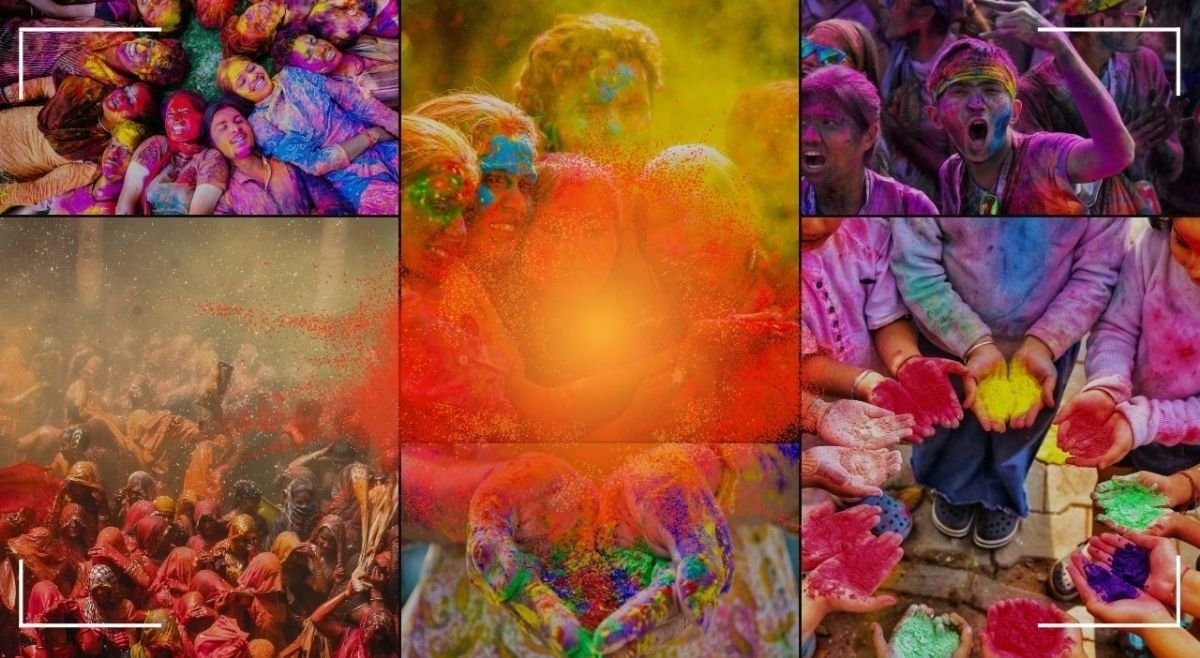

There is a particular kind of magic that only Holi can create. Holi 2026, also known as the Festival of Colors, will be celebrated across India with vibrant traditions, sacred rituals, and joyful gatherings. The excitement begins even before the festival arrives — in the sound of drums, the colors in the air, and the anticipation of togetherness. Holi is not just a celebration but a cultural and spiritual experience that brings people closer.
Holi, widely known as the Festival of Colors, is one of the most vibrant, meaningful, and emotionally resonant celebrations in the Hindu calendar. Observed with tremendous enthusiasm across India and now increasingly around the world, it is a festival that asks very little of you — just an open heart, a willingness to get wonderfully messy, and perhaps an old white kurta you won't mind losing to the colors.
But before we get carried away by the joy of it all, let us start at the very beginning: when exactly does Holi fall in 2026, and what makes this particular year's celebration special?
In most states across India, Holi unfolds over two days, each with its own distinct character, rituals, and energy. According to the Drik Panchang, here are the confirmed dates for 2026:
The Purnima Tithi (full moon) that governs this festival begins on March 2, 2026 at 5:55 PM and concludes on March 3, 2026 at 5:07 PM. Holika Dahan is performed during the Pradosh Kaal on the evening of March 3, once the Bhadra period — considered inauspicious for auspicious rituals — has passed. The ideal muhurat window for Holika Dahan falls between approximately 6:22 PM and 8:50 PM on the night of March 3.
What makes Holi uniquely powerful is that it does not arrive as a single event but as a two-act celebration — each day carrying its own atmosphere, its own rituals, and its own emotional weight.
As the sun dips below the horizon on March 3rd, communities across India gather around ceremonial bonfires built in open grounds, street corners, and courtyards. This ritual, known as Holika Dahan or Jalawali Holi, is both solemn and celebratory. The bonfire represents the destruction of Holika — the demoness of Hindu mythology — and by extension, the burning away of arrogance, ego, and all that is morally corrupt.
Families perform the puja with full Vedic customs — offering grains, dried coconut, new wheat stalks, flowers, and cow dung cakes into the sacred fire. Priests chant mantras dedicated to Lord Vishnu, Goddess Ambika, and Bhakt Prahlad. Devotees circle the fire in parikrama (clockwise circumambulation), and as the flames rise higher into the night sky, there is a shared understanding among those gathered: something old is being released, and something new is about to begin.
This is the day everyone has been counting down to. Rangwali Holi — also called Dhulandi or Rang Panchami in some regions — is the main day of color celebration. From early morning, the streets transform into rivers of pink, yellow, green, and red. Water guns are loaded, balloons are filled, and fistfuls of dry gulal are hurled at anyone within range — friends, neighbors, and delightfully unsuspecting strangers alike.
The festival traditionally begins after the morning puja, when families apply color to each other starting with the eldest members — a gesture of love and respect before the playful chaos begins. By midmorning, entire neighborhoods are unrecognizable under a glorious coat of color. By afternoon, the celebrations naturally quiet down as families gather indoors, wash off the gulal, and sit together for a feast of traditional sweets and savory dishes.
| Event | Date | Day / Timing |
|---|---|---|
| Holashtak Begins | February 24, 2026 | Tuesday |
| Rangbhari Ekadashi | February 27, 2026 | Friday |
| Purnima Tithi Begins | March 2, 2026 | Sunday, 5:55 PM |
| Purnima Tithi Ends | March 3, 2026 | Monday, 5:07 PM |
| Holika Dahan (Muhurat) | March 3, 2026 | Tuesday, 6:22–8:50 PM |
| Rangwali Holi | March 4, 2026 | Wednesday |
Holi carries layers of meaning that go far beyond the obvious joy of throwing color. At its core, the festival holds three distinct dimensions of significance: spiritual, agricultural, and social.
Holi marks the arrival of spring and the end of winter — a transitional moment that has been celebrated in some form in the Indian subcontinent for thousands of years. It falls on the Purnima, the full moon night, of the Hindu month of Phalguna, which corresponds to late February or mid-March on the Gregorian calendar. Traditionally, it was also a harvest celebration — farmers would bring stalks of the newly harvested wheat and barley to the Holika Dahan fire as an offering of gratitude, roasting them as prasad (blessed food). Even today, in rural parts of northern India, you will see new grain stalks placed in the bonfire as a living thread to this ancient agricultural ritual.
The story most closely associated with Holika Dahan is that of the young prince Prahlad and his aunt Holika. Prahlad's father, the demon king Hiranyakashipu, had grown so intoxicated with power that he declared himself a god and demanded that all beings — including his own son — worship him. Prahlad, a deeply devoted follower of Lord Vishnu, refused. No amount of cruelty, punishment, or coercion could break his faith.
In a final attempt to destroy his son, Hiranyakashipu turned to his sister Holika, who possessed a divine boon — a magical cloak that made her immune to fire. She agreed to sit in a bonfire with Prahlad in her lap, confident that the flames would consume the child while leaving her unharmed. What happened instead defied all expectation. The boon was negated by Holika's misuse of a divine gift for evil ends. The fire consumed her, while Prahlad emerged from the flames unscathed — protected, as the story goes, by the invisible shield of pure devotion. The Holika Dahan bonfire is a direct reenactment of that night: a reminder that righteousness, however embattled, ultimately prevails.
While Holika Dahan is rooted in the victory of faith over evil, Rangwali Holi draws its color and playfulness from the love story of Lord Krishna and Radha. As a young man in Gokul, Krishna was self-conscious about the dark blue of his skin compared to Radha's lighter complexion. Feeling disheartened, he went to his mother Yashoda to complain. With a warm laugh, she told him: go and apply whatever color you like on Radha's face — make her your color. Krishna took this suggestion quite literally, and what followed became one of the most beloved images in Hindu devotional art: Krishna and Radha, surrounded by the gopis of Vrindavan, playing with color, laughing, and celebrating the most joyful form of love. This is the spirit that fills every Holi celebration to this day.
If you have ever heard an elder in your family say 'Holashtak mein koi shubh kaam mat karo' — do not perform auspicious ceremonies during Holashtak — this is the eight-day period they are referring to. Holashtak begins on Ashtami (the eighth day) of the Shukla Paksha in the month of Phalguna and concludes on Purnima night with Holika Dahan.
In 2026, Holashtak runs from Tuesday, February 24 to Tuesday, March 3. During this period, important life ceremonies — weddings, housewarmings, mundan (first haircut), engagement rituals, and naming ceremonies — are traditionally avoided. The energy of Holashtak is considered unsettled, which is why it calls for inner reflection and preparation rather than new beginnings.
That said, Holashtak is anything but quiet in Braj. The temples of Vrindavan and Mathura come alive with early Holi celebrations, devotional music, and colorful processions during these eight days. The period is spiritually vibrant — it simply channels that energy inward rather than outward.
Five days before Holi, a unique and deeply devotional celebration takes place called Rangbhari Ekadashi — the Ekadashi filled with colors. According to Hindu tradition, this is the auspicious day on which Lord Shiva arrived in the holy city of Kashi (Varanasi) with Goddess Parvati after their divine marriage, and played Holi with her for the very first time in their new life together.
At the revered Kashi Vishwanath Temple in Varanasi, this day is marked with grand rituals, flower offerings, gulal showers, and devotional processions. The streets of Varanasi fill with bhajan singing and a spiritual energy that is at once festive and deeply sacred. For those who can travel to Varanasi around February 27th, witnessing Rangbhari Ekadashi is an experience that sits quietly in your memory for years afterward — the smell of agarbatti and gulal mixing in the air, the ancient ghats draped in spring colors, the Ganga flowing silently below.
While the rest of India celebrates Holi for one or two days, Braj — the sacred region encompassing Vrindavan, Mathura, Barsana, Nandgaon, and Gokul — celebrates for forty days straight, beginning with Basant Panchami in late January. This is not poetic exaggeration. The Rangotsav of Braj is a living spiritual marathon of color, devotion, community, and joy.
The celebrations open with devotees playfully throwing laddus at one another in an act of sweet, joyful devotion at the Radha Rani temple in Barsana.
The most famous folk tradition of Braj Holi. Women dressed as gopis playfully strike men (representing the gwalas of Nandgaon) with wooden lathis while the men shield themselves with padded guards. It is a joyful reenactment of the playful power dynamic between Radha and Krishna — impossibly energetic and visually spectacular.
The roles reverse. Now the women of Nandgaon take their turn with the lathis as the men of Barsana play the visitors. The ritual exchanges between the two villages have been alive for centuries.
Holi is played with fragrant flower petals — marigolds, roses, and seasonal blooms — rather than powder. This is one of the gentlest and most visually beautiful expressions of Holi imaginable.
Another ancient folk celebration where color play merges with devotional performance, songs, and community feasting.
One of the most moving developments in modern Holi history — widows of Vrindavan, who were once forbidden from participating in Holi celebrations, now play joyfully with color alongside the community. This change, supported by activists, NGOs, and the temple trust, is a powerful symbol of how ancient traditions can evolve with compassion and dignity.
The main Holi celebrations conclude in Braj with Holika Dahan on March 3 and the grand Rangwali Holi on March 4 — an experience that draws hundreds of thousands of visitors from across India and around the world every year.
It would be easy to think of gulal as simply colored powder. But every hue used in Holi carries layers of meaning that have been understood intuitively across generations. Red speaks of love, passion, and fertility — the burning color of devotion. Yellow echoes turmeric, that ancient healer and blessing agent, representing prosperity and new beginnings. Green is the color of nature itself — health, growth, and the promise of a fertile harvest season just arrived. Blue belongs to Lord Krishna — deep, vast, and eternal. And pink? Pink is the shade of pure, uncomplicated joy.
Traditionally, Holi colors were extracted entirely from natural sources. The tesu flower (Butea monosperma, also called Flame of the Forest) produced a stunning saffron-orange color that was the original palette of Braj Holi. Dried rose petals created soft pinks, henna leaves gave warm greens, and turmeric produced brilliant yellows. In recent years, there has been a meaningful return to these natural, organic colors — a shift that is better for skin, better for the environment, kinder to animals, and deeply connected to the historical roots of the festival.
On the day of Holi, once the color play begins to wind down and families retreat indoors, the kitchen becomes the second stage of celebration. No Holi is complete without a spread of traditional sweets and savory dishes that have been passed down through generations — each bite a memory in the making.
No sweet defines Holi quite like gujiya. These crescent-shaped pastries are filled with sweetened khoya (reduced milk), dried fruits — raisins, cashews, almonds — desiccated coconut, and fragrant cardamom, then folded and crimped by hand before being deep-fried to a perfect golden finish. In many households, making gujiya is itself a ritual — several generations of women gathered around a kitchen table, crimping edges and exchanging stories, the smell of frying ghee filling every room. A freshly made gujiya, still warm, is one of the most comforting things Holi has to offer.
Thandai is the defining drink of Holi — a chilled, fragrant blend of full-fat milk, sugar, saffron strands, cardamom, fennel seeds, rose water, melon seeds, and poppy seeds, all ground together and strained into an iced glass. It is cooling, aromatic, deeply satisfying, and the perfect antidote to a morning spent playing in the sun. In certain regions of Rajasthan and Uttar Pradesh, a traditional variant of Thandai is prepared with bhaang (an edible cannabis preparation), which has been part of the Holi tradition for centuries and remains a culturally and historically significant part of celebrations in those communities.
Where gujiya is sweet and indulgent, dahi bhalle (also called dahi vada) offer the perfect savory counterbalance. Soft lentil dumplings are soaked in water until they become pillowy, then placed in cool, whisked yogurt and generously topped with tamarind chutney, green coriander chutney, roasted cumin powder, red chili, and sometimes fine sev. It is refreshing, complex in flavor, and impossible to stop eating.
Beyond the main three, Holi tables across India are filled with malpua — soft, syrup-soaked pancakes fragrant with saffron and rose water, often served with rabri (thickened sweet cream). Puran poli (sweet flatbread stuffed with lentils and jaggery) is a beloved Holi dish in Maharashtra. Kanji vada, a tangy mustard-fermented drink with soaked lentil dumplings, is a traditional Rajasthani Holi staple. And across the north, papri chaat, samosas, and namak paare round out the savory offerings.
More than just food, these dishes are acts of love. The annual batch of gujiya made by a grandmother, the glass of thandai offered to a neighbor who drops by unannounced, the plate of dahi bhalle left at a cousin's door — this is how Holi actually moves through a community. Through sweetness.
If your Holi celebrations have so far been limited to your own neighborhood, 2026 — with a midweek Wednesday date and a Braj festival schedule packed with events across the last week of February — offers a golden opportunity to experience the festival somewhere extraordinary.
This is where Holi lives at its most authentic and most devotional. The Rangotsav of Braj stretches across the full week before the main date, with Lathmar Holi in Barsana and Nandgaon being absolutely unmissable. Book your accommodation months in advance — this is one of the most visited events on India's cultural calendar.
Rangbhari Ekadashi on February 27th transforms this already extraordinary city. The ghats dressed in gulal, the Ganga flowing below, the chanting from the Kashi Vishwanath Temple — Holi in Varanasi is spiritual, surreal, and deeply moving.
The Pink City becomes even more breathtakingly colorful during Holi. Celebrations at the City Palace grounds include folk music, traditional dance, and elephant processions. The setting is regal; the atmosphere is intoxicating.
Rabindranath Tagore's Basant Utsav at Visva-Bharati University is Holi distilled into art. Students in yellow sarees play with flower petals and soft colors while devotional songs fill the campus air. Quieter than Braj but no less beautiful.
For those who love history alongside celebration, Holi in Hampi — amid the ancient ruined temples and boulder-strewn landscape of the Deccan plateau — is a feast for the senses. The visual contrast of vivid color against centuries-old stone is genuinely otherworldly.
Apply coconut oil or a thick moisturizing cream generously to your face, neck, ears, and arms before the celebrations begin. Do the same for your hair — oil it well so the color sits on the surface and washes out more easily. Wear old clothes that you genuinely don't mind sacrificing. (They will not survive unchanged. Accept this joyfully.)
Synthetic colors — especially deep reds, blacks, and silvers — often contain metallic salts, industrial dyes, and other chemicals that can irritate the skin, damage hair, and cause allergic reactions. They are also harmful to animals and waterways. Natural colors made from tesu flowers, rose petals, henna, or turmeric are gentler, safer, and far more sustainable. Your skin and the environment will both be better for it.
Holi's spirit is one of inclusive joy, not compulsion. Always ask before applying color to someone who hasn't signaled they are playing. Be particularly mindful around elderly people, young children, those with skin sensitivities, and animals. The festival is at its best when everyone is a willing participant.
March can be deceptively warm, especially in northern and central India. Between the physical activity of celebrations and the excitement of the day, it is easy to forget to drink water. Keep a bottle nearby and take breaks in the shade. Holi is more fun when you feel well.
If you are playing with dry powder, consider wearing glasses or goggles — even simple sunglasses offer some protection. Gulal in the eyes is painful and, with synthetic colors, potentially harmful.
What began as a seasonal and spiritual celebration in the Indian subcontinent has, over the past few decades, traveled the world in ways that feel less like cultural export and more like something answering a universal human hunger for collective joy. Every year, Holi events of growing scale and enthusiasm take place in London's Trafalgar Square, New York's Central Park, Sydney's Darling Harbour, Cape Town, Amsterdam, Tokyo, and dozens of cities in between.
Color runs inspired by Holi — where participants are showered with colored powder at various checkpoints — have become one of the world's most popular recreational events, with millions of participants annually who have no direct cultural connection to the festival's origins but are drawn irresistibly to its core offering: the permission to be joyful, uninhibited, and colorful alongside strangers.
There is something quietly remarkable about watching people from entirely different languages, beliefs, and backgrounds throw handfuls of pink and yellow at each other and laugh together. Holi accomplishes without effort what many political movements struggle toward for generations. In that simple act of throwing color, something defensive falls away. Holi does not ask you to understand it before you feel it.
Ask anyone who has celebrated Holi more than a few times and they will tell you the same thing: it surprises you every year. Not in dramatic ways, necessarily, but in small, human ones. A spontaneous moment with a child you have never met who throws a fistful of yellow at you and then runs away giggling. A conversation with a neighbor you only usually wave at, standing together in the street, both painted beyond recognition, suddenly talking properly for the first time in years.
Sometimes the magic is quieter. Sitting on a rooftop as the afternoon cools, washing color off your hands, watching the sky turn golden over rooftops still dusted with pink. Realizing that another year has gone by at the speed of light, and that you are still here, still capable of this kind of uncomplicated happiness.
That, perhaps, is what Holi is most honestly about. Not the mythology, not the rituals, not even the extraordinary spectacle of Braj. It is about the temporary suspension of whatever makes ordinary life feel heavy. For a few hours every March, everyone looks equally ridiculous and equally radiant. In that shared, joyful messiness, something equalizing and profoundly human takes place.
Holi 2026 falls on Wednesday, March 4th — with Holika Dahan on the evening of March 3rd and a week of incredible Braj celebrations beginning from February 24th. Whether you are planning to travel to Vrindavan, celebrate in your own neighborhood, or attend a Holi event wherever you happen to be in the world, the preparations begin now.
Start setting aside old clothes that can be gloriously destroyed. Order organic gulal. Get the gujiya recipe out. Call the people you have been meaning to call for months. And when the morning of March 4th finally arrives, step outside, breathe in the cool end-of-winter air, and let Holi do what it has always done — remind you that being alive, surrounded by people you love, splashed in every color of joy, is more than enough reason to celebrate.
Holi 2026 will be celebrated on March 4, with Holika Dahan on March 3. The festival represents joy, renewal, and the victory of good over evil. Celebrated across India and globally, Holi continues to bring people together through colors, traditions, and shared happiness. Whether observed spiritually or socially, Holi remains one of the most meaningful festivals of the year.
Ans- Holi will be celebrated on March 4, 2026, and Holika Dahan will take place on March 2, 2026.
Holika Dahan symbolizes the victory of devotion and truth over evil, based on the story of Prahlad and Holika.
Holi celebrates the arrival of spring, unity among people, and the triumph of positivity over negativity.
Holika Dahan is a ritual bonfire performed one day before Holi, symbolizing the victory of good over evil.
Yes, Holi is a public holiday in most states of India and is celebrated with colors, sweets, and traditional rituals.