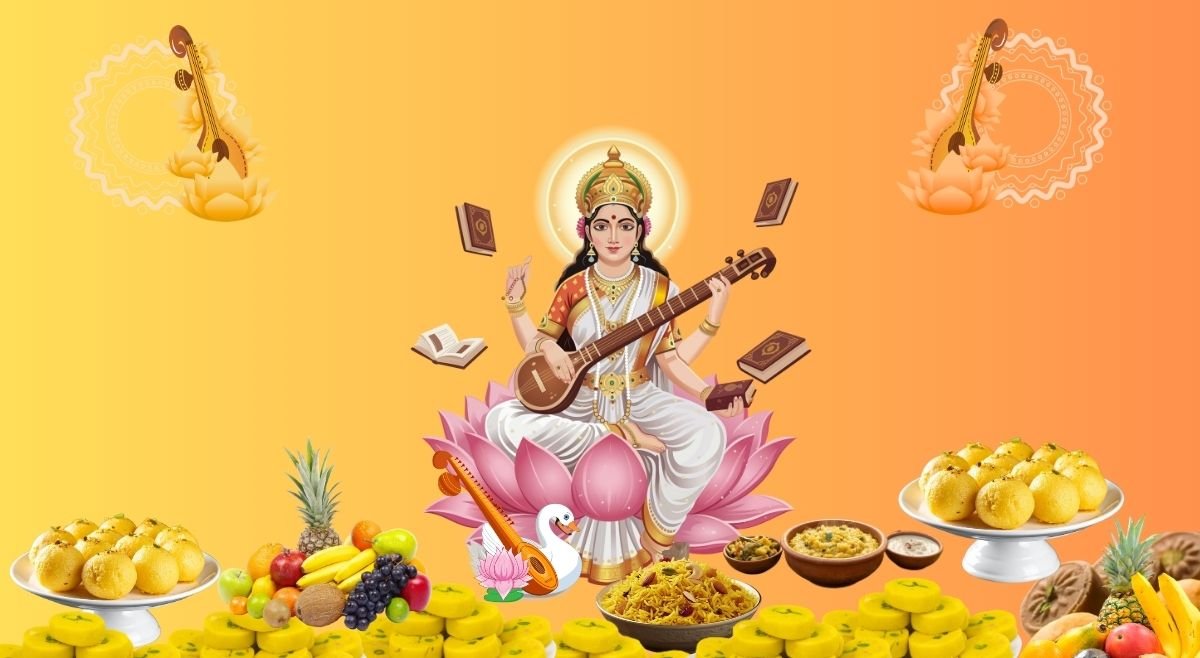

Vasant Panchami is not just another festival on the Hindu calendar—it marks the gentle arrival of spring, the season of renewal, learning, and positivity. Celebrated in honor of Goddess Saraswati, the deity of wisdom, knowledge, music, and art, Vasant Panchami 2026 will once again see homes, schools, and temples decorated in shades of yellow.
Among all the rituals performed on this auspicious day, offering yellow food as bhog holds deep spiritual, seasonal, and cultural importance. From kesari halwa to saffron rice and boondi, yellow-colored dishes are not chosen randomly. They carry meaning that connects nature, faith, and human life.
So why is yellow food so important in Vasant Panchami 2026 bhog? Let us explore the spiritual significance, scientific reasoning, cultural traditions, and modern relevance behind this beautiful practice.
Vasant Panchami is observed on the fifth day (Panchami) of the bright fortnight of Magha month. It symbolises the transition from harsh winter to pleasant spring, a time when mustard fields bloom, nature turns lively, and positivity fills the air.
This day is especially significant for:
Since Goddess Saraswati is associated with purity, clarity, and enlightenment, every ritual of this day reflects simplicity, brightness, and balance—qualities perfectly represented by the color yellow.
Before understanding yellow food, it is important to know why yellow dominates Vasant Panchami.
Yellow represents:
In Indian culture, yellow is considered highly auspicious. It mirrors:
Goddess Saraswati herself is often depicted wearing yellow or white attire, seated on a lotus, symbolising purity and learning. Thus, yellow becomes the natural color choice for clothing, decorations, flowers, and especially bhog offerings.
Offering food to a deity is not just about devotion—it is about energy, symbolism, and intention.
Yellow food in Vasant Panchami bhog signifies:
Yellow symbolizes intellect and learning. When devotees offer yellow food, they express gratitude for wisdom already received and seek blessings for clarity of thought and success in education.
Each deity is associated with certain colors and elements. Yellow aligns with the calm, sattvic energy of Goddess Saraswati, making the offering spiritually harmonious.
Most yellow foods prepared on this day are:
Such food is considered sattvic, promoting mental peace and spiritual growth.
Indian festivals are deeply rooted in seasonal wisdom, and Vasant Panchami is no exception.
During early spring:
Yellow foods made from:
are easy to digest and naturally warming. Thus, yellow bhog is not only symbolic but also scientifically suitable for the season.
Different regions of India prepare different yellow dishes, but the intention remains the same—simplicity and devotion.
You may wonder why only yellow food is emphasized when other festive foods exist.
The reason lies in symbolic focus. Vasant Panchami is not about indulgence but about:
Yellow food represents:
Bright colors like red are associated with power and energy, while white is linked to purity. Yellow beautifully sits in between—calm yet vibrant, gentle yet powerful.
During Saraswati Puja on Vasant Panchami:
Yellow bhog is offered after the puja as a mark of respect and devotion. Later, it is distributed as prasad, symbolizing the sharing of knowledge and blessings.
Many parents also encourage children to eat yellow prasad with faith, believing it brings:
In today’s fast-paced digital world, traditions often adapt rather than disappear. Vasant Panchami 2026 will be celebrated not only in temples but also in:
Even today, people choose:
The essence remains the same—intention matters more than complexity.
Vasant Panchami is often considered the best day for:
Yellow food strengthens this cultural belief. By offering yellow bhog, families symbolically invite:
into their homes.
This is why many schools also celebrate Vasant Panchami with yellow-themed activities and simple food distribution.
Yes. In modern households, fruits like:
are also offered as bhog, especially when time is limited. What matters is:
Yellow fruits align with the symbolic color and maintain the spiritual intent.
These practices help preserve the sattvic nature of the festival.
In a world where festivals are often reduced to social media posts, the tradition of yellow food reminds us of something deeper:
Vasant Panchami 2026 gives us an opportunity to pause, reflect, and reconnect with learning—not just academic knowledge, but wisdom in everyday life.
The importance of yellow food in Vasant Panchami 2026 bhog goes far beyond appearance or tradition. It is a beautiful blend of:
By offering yellow food, devotees align themselves with positivity, clarity, and growth—the very essence of Goddess Saraswati. As you prepare for Vasant Panchami 2026, remember that even a simple yellow dish prepared with devotion carries immense meaning.
At ExploreRealNews.com, we focus on explaining the cultural, spiritual, and social relevance of events that shape everyday life in India. Festivals like Vasant Panchami are not just religious observances—they reflect India’s deep connection with nature, seasonal cycles, education, and collective values.
As searches around Vasant Panchami 2026, its rituals, holiday status, and traditions continue to rise, there is a growing need for clear, well-researched, and easy-to-understand information. This article aims to explain the meaning behind one of the most searched aspects of the festival—the importance of yellow food in Vasant Panchami bhog—while keeping the focus on tradition, relevance, and modern-day understanding.
Our objective is to help readers understand why certain customs exist, how they evolved, and how they are still meaningful today. By presenting cultural practices in a factual yet human way, ExploreRealNews.com ensures that age-old traditions remain accessible and relevant for current and future generations.
Stay tuned for more industry updates.
Follow us on facebook, Instagram, Linkedln and twitter for fresh perspectives and practical tips that make everyday living better.